
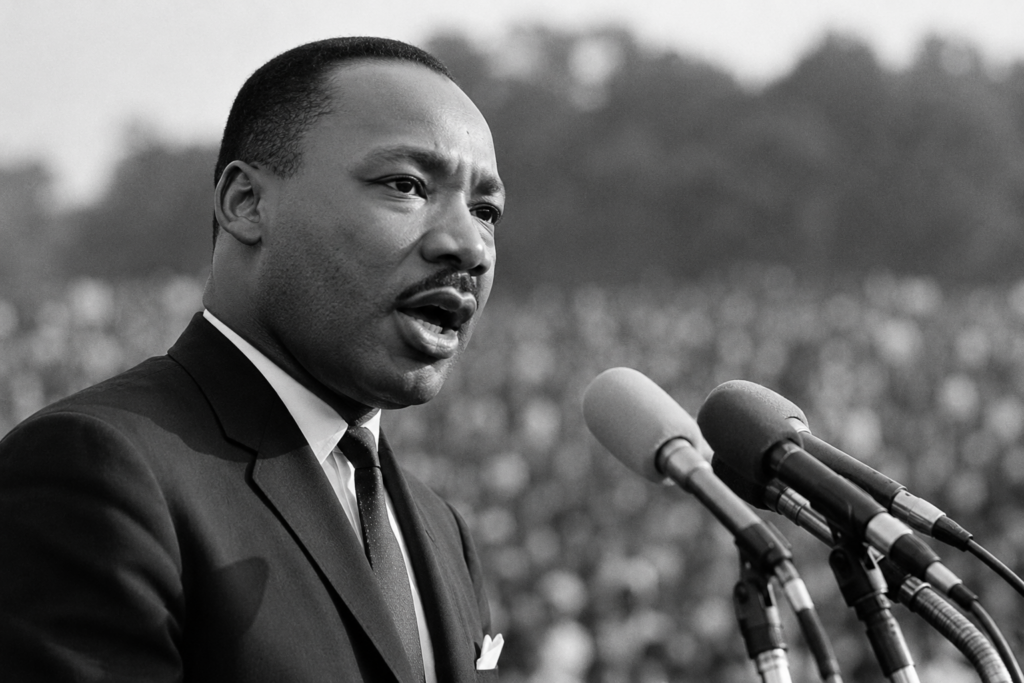
Vivid language = deep resonance
Ask any group to name their top three speeches of all time and I Have a Dream by Martin Luther King Jr will almost always be mentioned.
There is so much to admire in this speech, but one element stands out for me. It is something all of us can adopt. The power of vivid language.
Most communicators understand the need to connect with an audience. They aim to trigger an emotional response.
Leaders know that to motivate a team, they must first inspire them.
But how do we actually do that?
I remember running a workshop some years ago with a group of senior leaders in professional services. We were discussing the importance of storytelling. One of the participants had studied creative writing at university, and the point about MLK resonated with her. She recalled a simple principle from fiction writing. You must show your audience something rather than tell them.
This might seem strange when our only tool is words.
But it comes down to choosing and arranging words in a way that creates vivid pictures in the minds of our audience. Whether they are readers or listeners, we want our ideas to pass through the creative part of their brain so they form their own images. These images belong to them. They will have far greater impact than any list of facts, no matter how detailed.
Vivid language creates deep resonance. The emotional response follows naturally. The memory lasts.
Examples from I Have a Dream
Consider these lines, even if you have heard them many times. What images come to mind? What do you feel?
“Every valley shall be exalted, every hill and mountain shall be made low”
“Sweltering summer of the Negro’s legitimate discontent”
“Quicksands of racial injustice”
“Mississippi, a desert state, sweltering with the heat of injustice”
“Lonely island of poverty in the midst of a vast ocean of material prosperity”
“Joyous daybreak to end the long night of their captivity”
Language, at its best, makes people feel something.
If you are asking your audience to change their thinking or their actions, you must first move them emotionally. Real change happens when people believe for themselves that it is the right thing to do.